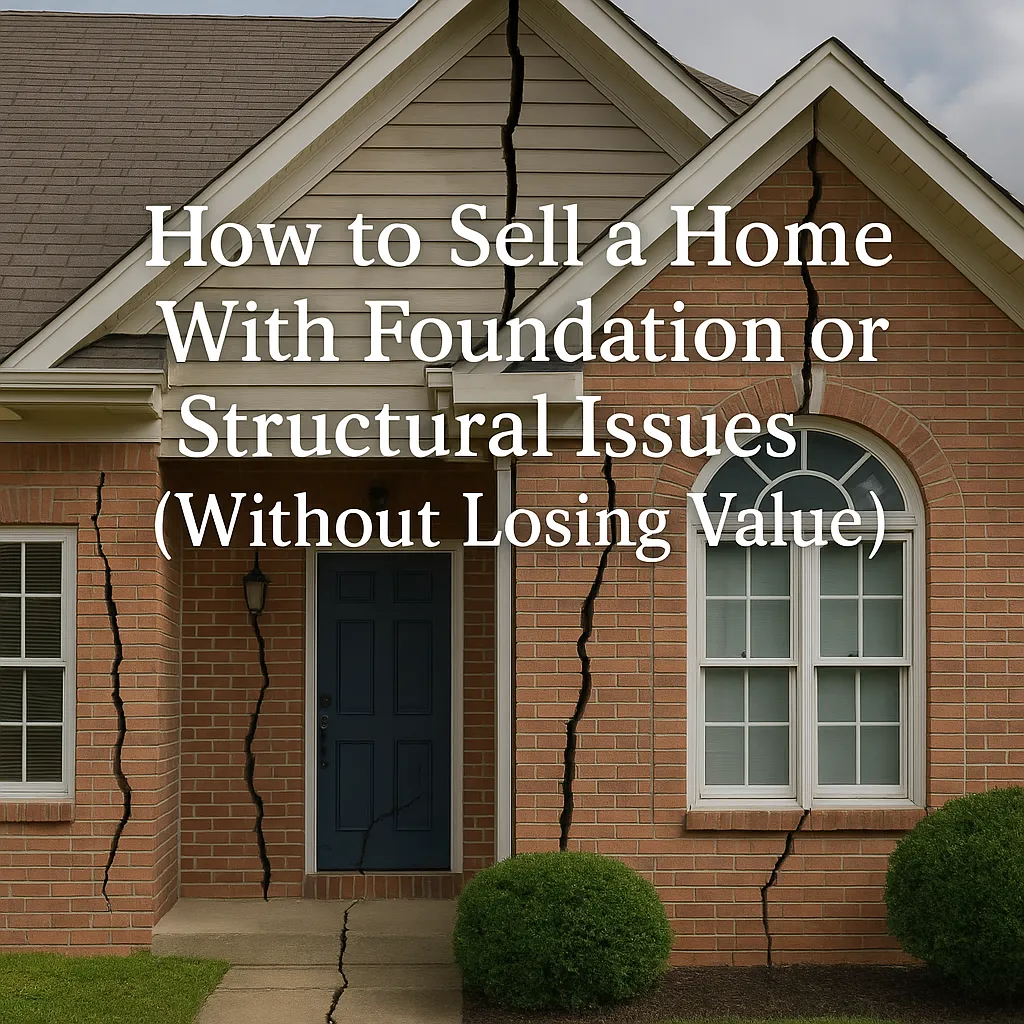
🧱 How to Sell a Home With Foundation or Structural Issues (Without Losing Value)
🧱 How to Sell a Home With Foundation or Structural Issues (Without Losing Value)
Finding out your home has a foundation or structural issue can feel overwhelming—especially if you're preparing to sell. Cracks, uneven flooring, bowing walls, or moisture problems can make any seller think:
“Will anyone even buy my home now?”
The truth is… yes, they will.
Homes with structural issues sell all the time, and many still sell for strong prices when handled correctly.
At Hanson Capital Homes, we’ve helped sellers across Chattanooga Valley, North Georgia, and East Tennessee navigate this exact situation. With the right strategy, transparency, and pricing approach, you can protect your equity and attract the right buyers.
Here’s your step-by-step plan.
🔍 Step 1: Get a Professional Diagnosis Before You List
Before you make assumptions—or allow buyers to define the problem—get a structural engineer’s report or professional foundation inspection.
This gives you:
A clear explanation of the issue
A written evaluation buyers can trust
Accurate repair estimates
Stronger negotiating power
Buyers fear the unknown more than the issue itself.
A documented problem is far less scary than a mystery crack.
🎯 Pro Tip: In Chattanooga Valley, engineer reports with repair suggestions often calm buyer concerns immediately.
🛠️ Step 2: Decide Whether to Repair or Sell As-Is
Both strategies can protect your value. The right choice depends on your budget, timeline, and goals.
✅ Option 1: Repair Before Selling
This works well if:
You can afford the repairs
You want to appeal to the largest buyer pool
You want top-of-market value
Benefits include:
Higher buyer confidence
Marketing as “repaired with transferable warranty”
Smoother inspections and appraisals
💬 Homes with warranty-backed repairs often sell faster and with less negotiation.
⚠️ Option 2: Sell As-Is (Fully Disclosed)
This option is ideal when:
Repairs are too expensive upfront
You need to sell quickly
You want to attract investors or cash buyers
To sell as-is successfully:
Disclose the issue clearly
Provide copies of inspections and estimates
Price based on the repair—not out of fear
💡 In markets like East Ridge, Red Bank, and Fort Oglethorpe, many investors expect foundational or structural work—and won’t be scared off.
💰 Step 3: Price Strategically (Don’t Slash Your Value)
A common mistake sellers make is dropping the price too low out of panic.
But foundation issues don’t automatically mean a huge value loss.
Example:
Market value after repairs = $350,000
Estimated repairs = $18,000
Smart pricing: $330,000–$335,000
This shows buyers:
The price reflects the issue
You’re reasonable and transparent
You’re not distressed or desperate
🎯 Buyers respond better when they understand the math behind your price.
🧠 Step 4: Use Buyer Psychology to Your Advantage
Buyers don’t walk away from issues—they walk away from surprises.
When you provide:
Engineer reports
Contractor estimates
Photos
Warranty details
…you build trust, reduce negotiation pressure, and give the buyer a sense of control.
🧩 Phrase issues confidently:
Instead of:
“There’s a crack and I’m not sure why.”
Say:
“A structural engineer evaluated the crack and provided a recommended solution. Report and estimate available.”
This instantly shifts buyer perception.
🏘️ Step 5: Target the Right Buyer Audience
Not every buyer is ideal for a home with structural issues—but many are.
Best buyer types:
Cash buyers
Investors
Renovation-loan buyers (FHA 203k, conventional rehab)
Buyers looking for sweat equity
These buyers understand repair costs and often move faster.
📍 Chattanooga Valley Insight:
The investor market around Rossville, East Ridge, Red Bank, and North GA is strong and active—making as-is properties attractive to experienced buyers.
⚖️ Step 6: Disclose Everything (It Protects You)
Tennessee and Georgia law requires sellers to disclose known material defects, including structural or foundational issues.
This protects you from:
Future claims
Lawsuits
Contract disputes
💬 Clear disclosure paired with professional documentation creates a smoother transaction for everyone.
🧠 Featured Snippet: How to Sell a Home With Structural Issues
Get engineer or foundation report
Decide on repairs vs. as-is sale
Price based on repair cost—not fear
Target investors, cash buyers, or renovation-loan buyers
Disclose issues clearly to protect yourself
🏁 Final Thoughts: You Can Sell Successfully With the Right Plan
Structural issues don’t have to destroy your sale—or your profit.
With transparency, the right pricing strategy, and a clear understanding of your buyer pool, you can sell confidently and still protect your equity.
At Hanson Capital Homes, we guide sellers step-by-step to ensure you make informed choices, avoid unnecessary losses, and attract the right buyers.
🎯 Want to talk through the best strategy for selling a home with structural concerns? Let’s review your options together. Click here!
💬 Question for Readers:
Would you repair foundation issues before selling—or list as-is and let the buyer take it on?